
Following devastating floods in Nepal, families are facing immense challenges in identifying their missing relatives. Hospitals are overwhelmed with unidentified bodies, leading to disputed claims and a reliance on DNA testing, which can take months. Personal belongings and distinctive features are sometimes used, but forensic evidence is often the only conclusive method.

Nepal Police has urged the public to return any valuables, including gold, silver, cash, or documents, found after the August 26 floods, warning that keeping such items could lead to legal action. This warning follows the arrest of 29 people for allegedly looting a bank safe swept downstream by the floods.

Devastating flash floods in Nepal, triggered by an ice and rock collapse, have led to over 900 deaths and 4,000 missing. Rescue operations by security personnel are severely hampered by critical shortages of specialised equipment, including thermal cameras, body bags, ropes, and helicopters. International assistance from India and China is aiding the search for missing workers, highlighting Nepal's long-standing disaster management capacity issues and inadequate funding.

The death toll from devastating flash floods in Nepal has surged to 1,050, with nearly 4,000 people, including foreigners and security personnel, still missing. Rescuers are struggling with intermittent rainfall, rising river levels, and difficult terrain, while expert teams from India and China assist in operations, particularly at hydropower project sites where many workers are believed to be trapped in tunnels.

Nepal is grappling with one of its worst disasters in recent years as massive flash floods, triggered by an ice avalanche, have claimed 270 lives and left thousands missing across multiple districts, prompting urgent rescue and relief operations.

Nepal has introduced a media safety and operational protocol for journalists covering flood-affected regions, particularly for foreign media. The new guidelines, issued after devastating floods on August 26, mandate accreditation, adherence to safety instructions, and restrictions on movement in rescue zones to ensure orderly reporting and prevent interference with relief efforts.

The death toll from devastating flash floods in Nepal has tragically risen to 903, with 4,247 people still reported missing, including security personnel and foreigners. India has dispatched an 18-member team of forensic experts to assist with DNA analysis and identification of victims.

'We desperately want India to send the army as the evacuation process needs to be escalated immediately.'

One week ago, on August 26, 2026, deadly flash floods and mudslides devasted Nepal. Powerful floodwaters and landslides tore through river towns, leaving behind widespread destruction and grief. Rescue efforts across the affected districts continue even as hopes fade of finding survivors.

China on Friday said the collapse of a high-altitude glacier in Nepal may have triggered the massive flash flood disaster that engulfed the Tibet-Nepal border, killing hundreds and causing widespread damage.

Nepal is grappling with devastating flash floods and landslides that have claimed over 650 lives and left more than 2,400 missing. Rescue operations are underway, but fresh warnings of heavy rainfall and thunderstorms from the meteorology department threaten to disrupt these efforts, exacerbating the crisis. Chinese authorities have also issued alerts regarding a potential barrier lake breach in Tibet, posing further flood risks downstream.

Following devastating flash floods in Nepal, experts are calling for systematic scientific assessments of glaciers to understand and mitigate hazards, alongside the development of a robust land use policy for the Himalayan region. The floods, which killed over 460 people and left thousands missing, are believed to be linked to climate change impacts on glaciers and permafrost.

Eleven days after devastating floods triggered by an ice-rock avalanche, Nepal continues to grapple with a rising death toll of 1,344 and nearly 5,000 missing. Authorities face significant challenges in identifying the deceased, with many bodies severely damaged. DNA samples are being collected from relatives to aid identification, while the government mobilises relief and rehabilitation efforts. A fresh flood incident in Gorkha district also caused damage.

Chinese President Xi Jinping has ordered extensive rescue operations following devastating flash floods and mudslides near the China-Nepal border in Tibet. The disaster has caused heavy casualties, left nearly 400 people missing, including 105 Indians and 37 NRIs, and damaged infrastructure. Emergency teams have been deployed, and efforts are underway to evacuate residents and provide medical aid.

A Thane family is desperately searching for their 28-year-old son, Abhishek Ghone, who went missing in Nepal after flash floods struck during his Kailash Mansarovar pilgrimage. Despite using AI tools to track his location, the family seeks official verification and urges authorities to provide concrete information about his whereabouts.

A recent study by scientists indicates that the Hindu Kush-Himalaya region is experiencing increased frequency and intensity of extreme weather events due to climate change, including rapid glacial melting and changing rainfall patterns. However, the research also cautions against solely blaming climate change, highlighting that human factors like population growth, commercial activities, and non-enforcement of regulations contribute significantly to the vulnerability and impact of these disasters. The study points out that many devastating floods originate from small glaciers and rain-fed streams, exacerbated by encroachment on unstable slopes and floodplains.

On Wednesday, August 26, 2026, devastating flash floods in Nepal's Rasuwa district, bordering Tibet, left 105 Indian tourists among nearly 400 people missing.

Congress MP Shashi Tharoor faced significant backlash on social media for describing the Nepal flash floods as "drama." Despite expressing concern and detailing the devastation, his choice of words was widely criticised as insensitive, leading to questions about his vocabulary usage.

The weather office has warned that the prevailing monsoon conditions could trigger flash floods, landslides, waterlogging and a further rise in river levels across the Northeast.

At least 12 people from Bihar's East Champaran district, including five members of one family, are missing following devastating flash floods in Nepal. The disaster, which struck four days ago, has left hundreds of Indians and persons of Indian origin unaccounted for, with a significant death toll reported in Nepal.

The death toll from devastating flash floods in Nepal has surged to 1,252, with more bodies recovered and fresh flood risks emerging due to continuous rainfall in the Bhotekoshi River's upstream areas. The disaster, triggered by an ice-rock avalanche, has also left 4,875 people missing and prompted calls to address climate change's impact on the Himalayan region.

Sikkim has identified 40 high-hazard glacial lakes, with 16 at the highest risk of catastrophic outbursts. Following a devastating GLOF in 2023, the state is developing India's first dedicated GLOF Risk Mitigation Protocol, using advanced monitoring and interdisciplinary approaches to protect downstream settlements and serve as a model for other Himalayan regions.

Images emerging from Nepal show the extent of destruction caused by the massive flash flood that swept through the Bhote Koshi and Trishuli river corridors, with houses, roads and bridges destroyed and large areas covered with mud, rocks and debris.

Nepal is grappling with a deepening flood crisis as the death toll from devastating flash floods in Rasuwa and surrounding districts has tragically risen to 538, with authorities now warning of a fresh flood threat and initiating evacuations.
'This is no longer a single-hazard problem; it is a cascading, multi-hazard problem. A landslide never occurs in isolation. This entire chain is the cascading effect of what looks, at first, like a single disaster.'

Five friends from Raipur, Chhattisgarh, narrowly escaped being swept away by flash floods in Nepal's Bhote Koshi and Trishuli river valleys thanks to an impromptu tea break. They endured two tense days on higher ground, witnessing devastation, before returning home safely, with a poignant Raksha Bandhan moment providing comfort.

Experts from the International Centre for Integrated Mountain Development (ICIMOD) suggest that an ice-rock avalanche originating in a high-altitude area likely triggered the devastating flash floods that swept across central Nepal districts, killing at least 95 people and leaving nearly 500 missing.

Approximately 27 workers are trapped inside an under-construction tunnel in Sikkim's Namchi district following a landslide and suspected gas leak. Rescue operations are underway, but the presence of gas, believed to be methane, is complicating efforts, causing dizziness among rescue personnel. Teams from NDRF, SDRF, and West Bengal are involved in the challenging operation to save the workers.

A Pakistani senator has warned that India's approval of a hydel power project on the Chenab River will further inflame tensions between the two countries, particularly in light of the suspended Indus Waters Treaty.
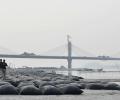
China has formally started the construction of a USD 167.8 billion dam over the Brahmaputra River in Tibet, close to the Indian border in Arunachal Pradesh, raising concerns in India and Bangladesh.
India's power sector is undergoing a significant transformation, driven by a planned shift towards renewable energy and ambitious capacity expansion targets, with major players like NTPC, JSW Energy, Adani, and Tata Power prioritising predictable returns. However, execution challenges and valuation concerns remain critical factors for sustained growth.

'It appears to be a combination: A glacier breaking away, and a dam-like formation downstream reaching capacity and releasing water suddenly.'

Karnataka Chief Minister D K Shivakumar has appealed to his Tamil Nadu counterpart C Vijay Joseph to defer his proposed August 3 visit to Bengaluru. The request comes amidst widespread protests in Karnataka following a decision by the CWMA upholding a direction for Karnataka to release 3,500 cusecs of water to Tamil Nadu.
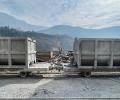
A loco train carrying workers for tunnel excavation during the night shift was about two kilometres inside the tunnel when another loco train coming from the opposite direction lost control and collided with it.
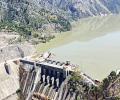
India rejects this so-called "supplemental award", the ministry of external affairs said, referring to the ruling in the case related to Pakistan's objections to Kishenganga and Ratle hydropower projects.

Adani Power on Saturday said it has inked a pact with Bhutan's state-owned utility Druk Green Power to set up a 570MW hydro project entailing investment of Rs 6,000 crore, in the Himalayan Kingdom. As per the pact, Adani Power and Druk Green Power Corp Ltd (DGPC), will initiate the the peaking run-of-river Wangchhu hydroelectric project on a BOOT (Build, Own, Operate, Transfer) model.
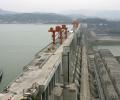
China has defended its plan to build the world's largest dam on the Brahmaputra River in Tibet, assuring that the project will not affect riparian states and safety issues have been addressed through decades of studies. The dam, estimated to cost USD 137 billion, has raised concerns in India and Bangladesh, but Chinese authorities maintain that the project has been thoroughly studied and safeguards are in place. The dam is part of China's efforts to develop clean energy and respond to climate change.
China has approved the construction of the world's largest dam on the Brahmaputra River in Tibet, close to the Indian border. The USD 137 billion project, which is expected to dwarf even China's own Three Gorges Dam, has raised concerns in India and Bangladesh, the downstream riparian states. Concerns in India are centered around China's potential to control water flow, potentially enabling the release of large amounts of water to flood border areas in times of hostilities. The dam is part of China's 14th Five-Year Plan, and the Chinese government claims that the project is safe and prioritizes ecological protection.

Two days after five Chinese nationals were killed in a suicide attack at a hydropower project in Khyber Pakhtunkhwa in Pakistan, a Chinese company has suspended civil works and laid off hundreds of workers at another hydropower project in the same restive province, according to media reports on Thursday.

Is Bhutan merely experimenting with digital finance -- or is the Himalayan kingdom punching far above its weight, quietly playing one of the most sophisticated strategic games in Asia today? asks Varun Arya.
